

정보연 JUNG BO YOUN
- Connect
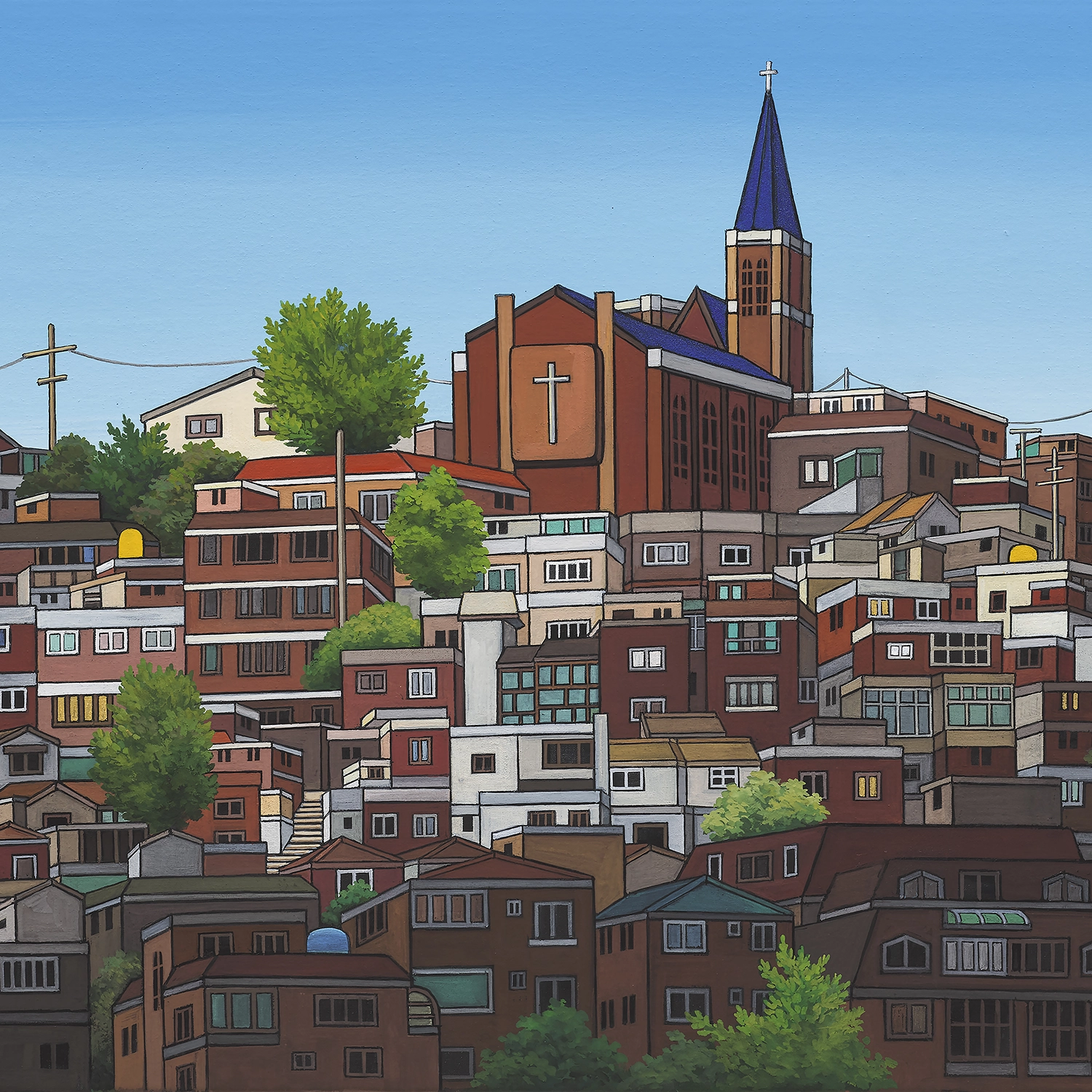
정보연은 도시의 오래된 골목과 산동네 풍경을 통해 일상의 기억과 그 안에 깃든 삶의 이야기를 담아내는 작가이다. 특히 서울 한남동의 좁은 골목과 언덕을 따라 촘촘히 들어선 집들을 주요 소재로 삼아, 익숙한 도시 풍경 속에 축적된 시간과 사람들의 흔적을 회화적으로 재구성해왔다. 작가에게 산동네는 단순한 풍경의 대상이 아니라 저마다의 사연을 품고 살아가는 사람들의 삶이 겹겹이 쌓인 공간이자, 고단한 현실 속에서도 희망을 이어가는 일상의 장소이다.
정보연은 한국 전통 채색화 기법을 바탕으로 선명한 색채와 정교한 화면 구성을 통해 자신만의 독창적인 풍경을 완성한다. 불화가인 아버지로부터 전통 채색 기법을 익힌 작가는 천을 바탕으로 안료를 사용해 섬세하게 색을 쌓아 올리며, 건물과 골목의 형태를 명확한 윤곽선과 기하학적인 색면으로 표현한다. 촘촘하게 배열된 지붕과 창문, 계단과 골목길은 다채로운 색채의 조화를 이루며, 구체적인 도시의 모습과 추상적인 조형성이 공존하는 화면을 만들어낸다.
작품에서 빛은 풍경의 정서를 이끄는 중요한 요소이다. 어둠이 내려앉은 산동네의 창문과 가로등에서 번져 나오는 따뜻한 불빛은 집마다 이어지는 삶의 온기를 환기하며, 고단한 일상 속에서도 내일을 희망하는 사람들의 모습을 떠올리게 한다. 수직으로 이어지는 건물의 구조와 그 사이를 가로지르는 골목의 흐름은 화면에 리듬감을 부여하고, 빛과 어둠이 교차하는 풍경은 일상의 고단함과 그 속에서도 지속되는 삶의 의지를 함께 드러낸다.
오랜 시간 한남동의 풍경을 그려온 작가는 재개발로 인해 익숙한 장소들이 사라진 이후, 기억 속에 남은 풍경과 그동안 축적해온 자료를 바탕으로 작업을 이어가고 있다. 빠르게 변화하는 도시 속에서 잊혀가는 공간과 그 안에 머물렀던 삶의 흔적을 회화로 남기고자 하는 것이다. 정보연의 작품은 사라진 풍경을 단순히 재현하는 데 머무르지 않고, 평범한 일상에 깃든 소중한 기억과 정서를 되새기며 보는 이에게 따뜻한 공감과 위안을 전하고자 한다.
Jung Bo Youn is an artist who explores memories of everyday life and the stories of those who inhabit urban spaces through paintings of old alleyways and hillside neighborhoods. Focusing particularly on the narrow streets and densely clustered houses along the hillsides of Hannam-dong in Seoul, she reconstructs familiar urban landscapes through painting, capturing the passage of time and traces of human life embedded within them. For the artist, these hillside neighborhoods are more than mere subjects of landscape painting. They are places where the lives and stories of countless individuals intertwine, and where hope persists despite the hardships of everyday existence.
Drawing on traditional Korean painting techniques, Jung creates distinctive landscapes characterized by vivid colors and meticulously structured compositions. Having learned traditional coloring techniques from her father, a Buddhist painter, she carefully builds up layers of pigment on fabric, defining buildings and alleyways through precise outlines and geometric planes of color. Densely arranged rooftops, windows, stairways, and narrow streets form intricate harmonies of color, creating compositions in which recognizable urban scenery coexists with abstract visual elements.
Light plays a central role in shaping the emotional atmosphere of her paintings. The warm glow emanating from windows and streetlights in darkened hillside neighborhoods evokes the presence of everyday life within each home, suggesting the quiet hope of those who look toward tomorrow despite the difficulties of the present. The vertical arrangement of buildings and the intersecting paths of alleyways create a visual rhythm, while the interplay of light and darkness conveys both the hardships of daily life and the enduring resilience of the people who inhabit these spaces.
Having painted the landscapes of Hannam-dong for many years, Jung continues her practice by drawing upon her memories and accumulated archival materials following the disappearance of familiar neighborhoods through urban redevelopment. Her work seeks to preserve the vanishing spaces of a rapidly changing city and the traces of lives once lived within them. Rather than simply reproducing landscapes that no longer exist, her paintings revisit the precious memories and emotions embedded in ordinary life, seeking to offer viewers a sense of empathy, warmth, and comfort.
